

Bringing out the music in every young beginner!
The Gift of MusicNurturing Young Minds Music for Little Mozarts
Music for Little Mozarts is a premier piano and musicianship program specifically crafted for children aged three to six. Created by Christine H. Barden, Gayle Kowalchyk, and E. L. Lancaster, it is the first series for young beginners that fully integrates age-appropriate piano instruction with activities that foster overall musical development
Join Free Consultation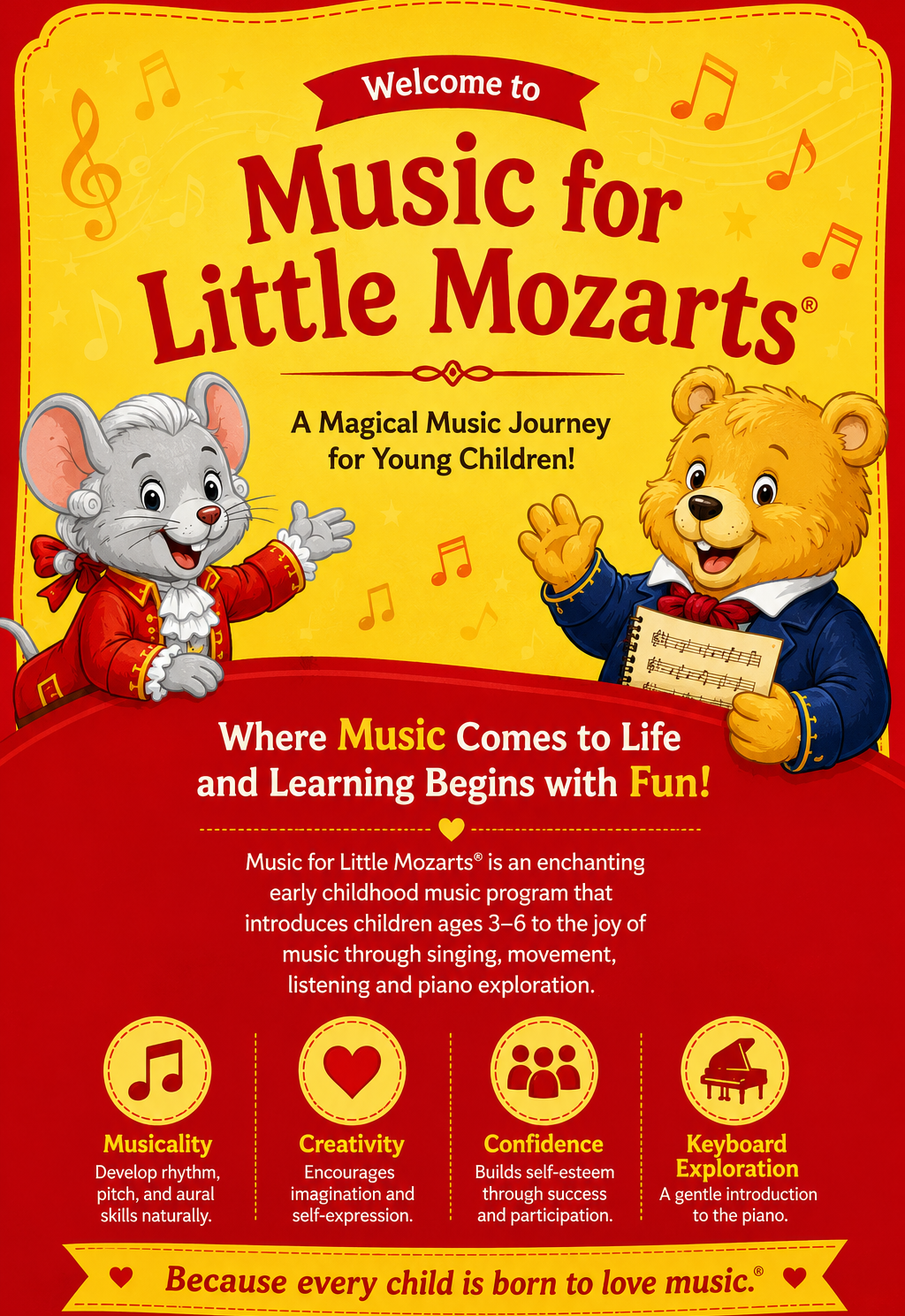
The “Musical Adventure” Concept
The heart of the program is an imaginative story following the adventures of Beethoven Bear and Mozart Mouse. These characters travel from a playroom to a recital stage, making the learning process engaging and relatable for young children. Using plush animals of these characters helps bring the music to life, transforming lessons into a “Musical Adventure”
Why Early Music Study Matters
Beyond learning an instrument, the program leverages the “pre-operational” learning stage (ages 2–7) to enhance a child’s intellectual development. Key benefits identified in the sources include:
Cognitive Growth
Early music study is linked to higher spatial-temporal task scores and improved abstract reasoning skills essential for math and science
Physical Development
The curriculum supports both large and small muscle development through movement and keyboard play
Emotional Well-being
Music serves as a creative outlet that can soothe emotions, release tension, and bring immense pleasure to the listener
What Your Child Will Learn
The program combines general musicianship with performance skills at the piano.
The core components include:
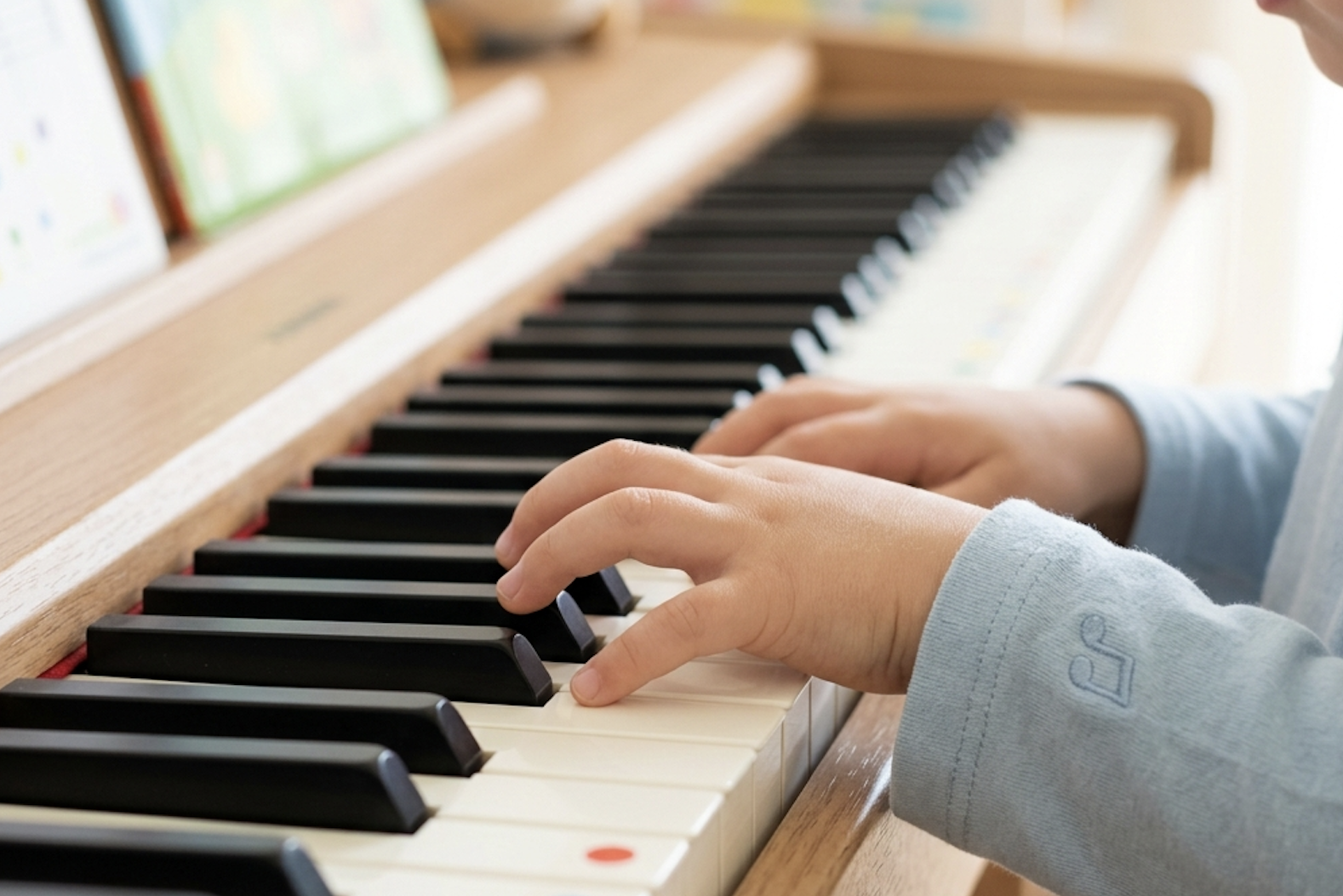
Keyboard Performance
Tailored for small hands and short attention spans, students begin by playing on black keys to establish a balanced hand position before moving to more complex patterns
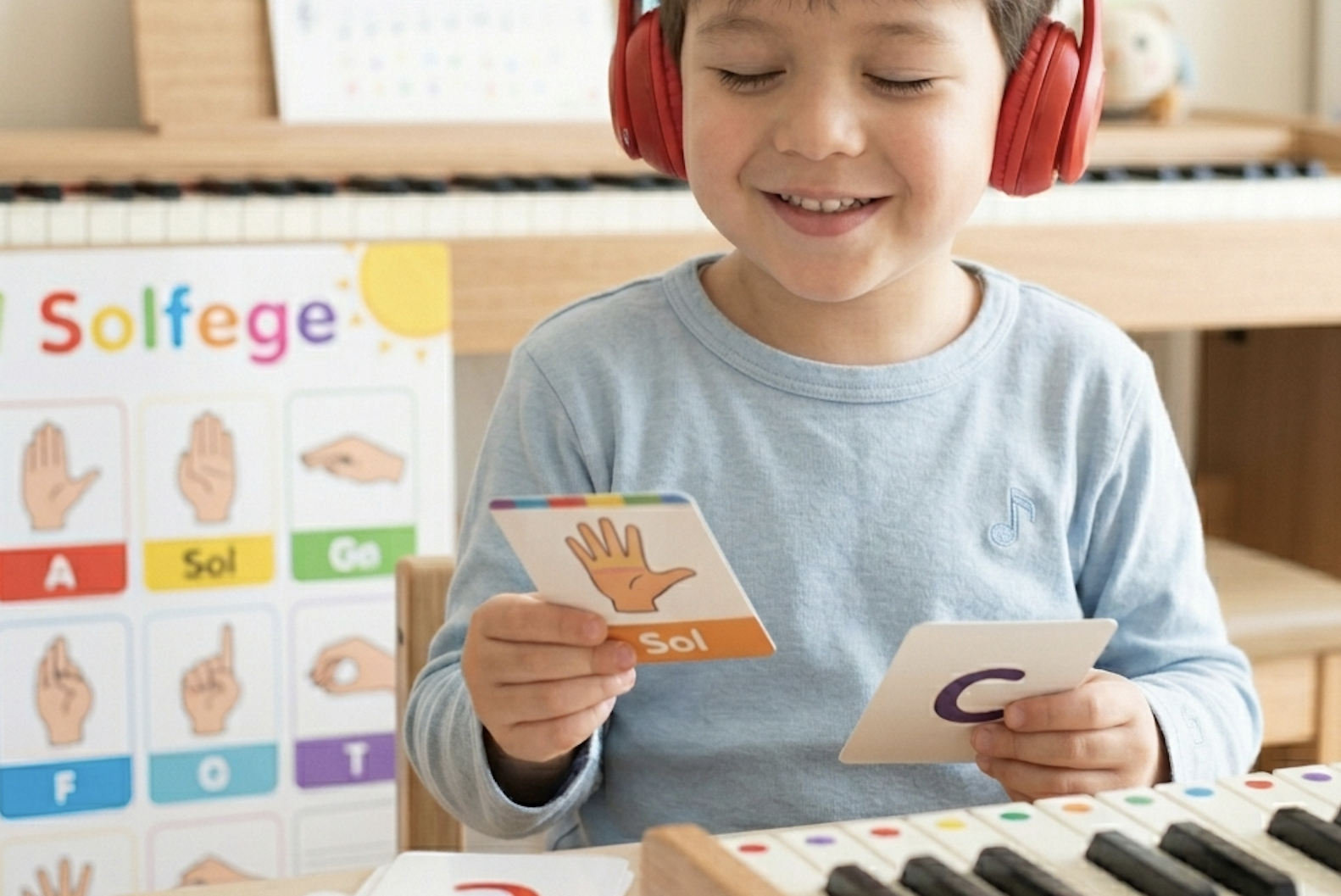
Listening & Pitch Matching
Children develop their “musical intelligence” by listening to various styles and imitating pitches using solfege or letter names

Singing & Rhythm
Students use their voices to develop expressive nature and learn to maintain a steady beat through clapping, tapping, and using rhythm instruments
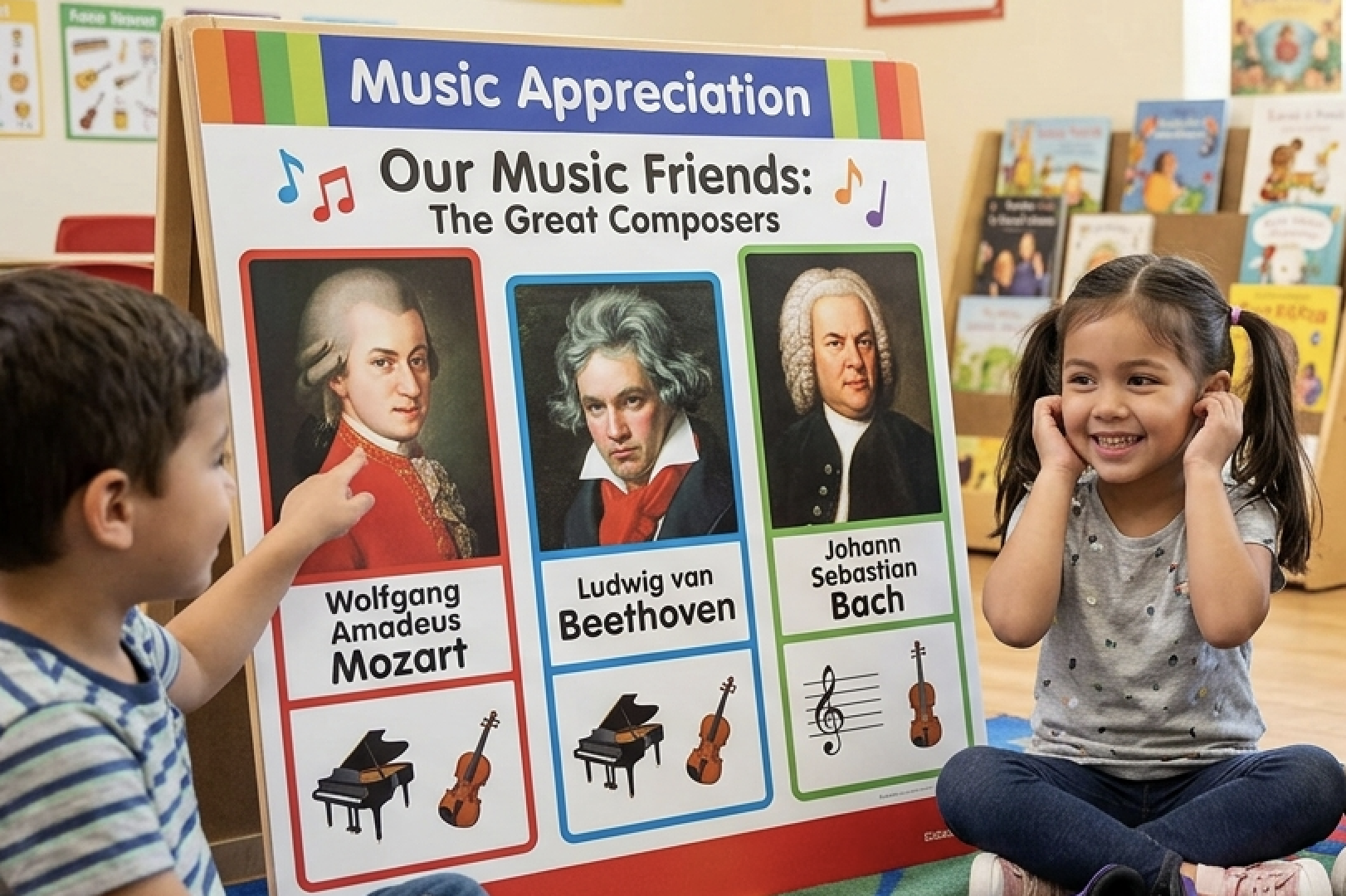
Music Appreciation
Children are introduced to major composers throughout history, learning to listen to and enjoy complex musical compositions
Course Structure & Materials
The program is structured as a two-year journey consisting of four levels. Each level typically takes 18–24 weeks to complete
Core Books
Each level uses a Music Lesson Book (concepts), a Music Workbook (coloring/ear training), and a Music Discovery Book (singing/movement)
Progression
After completing Level 4, students are prepared to transition into ABRSM Piano Grade 1.
Starter Kit
Beginners receive a special kit including a music bag and the essential Beethoven Bear and Mozart Mouse plush toys
The Role of the Parent
Music study is presented as a total partnership between the child, the teacher, and the parents. Parents are encouraged to:
🐻 Supervise daily practice sessions of 10–15 minutes in a quiet environment.
🐻 Share in the learning process by reading the Lesson Book stories and listening to the program CDs together.
🐻 Provide constant support and encouragement to ensure the child feels successful in their musical journey.
Frequently Asked Questions (Q&A)
1. Why should my child study music at such a young age?
🐻 Research shows that early music study improves learning, memory, reasoning ability, and general creativity. It contributes to the growth of a well-balanced child by enhancing sensitivity and expressiveness.
2. Is this program better for private or group lessons?
🐻 Music for Little Mozarts is equally effective in both private and group settings. Group lessons offer the added benefit of peer interaction, which many young children enjoy.
3. What is my role as a parent in this process?
🐻 Parents are vital partners in music study. Your role includes supervising daily practice sessions (10–15 minutes), serving as an encouraging audience, and sharing the learning process at home by reading the lesson book stories and listening to the program CDs together.
4. How much practice is required?
🐻 Children should practice daily for 10–15 minutes in a quiet environment without distractions like the TV. Two brief practice sessions are often more effective than one long session for this age group.
5. What makes this program unique compared to others?
🐻 Unlike courses that focus solely on keyboard performance, this series provides a comprehensive foundation for a lifetime of musical enjoyment by integrating singing, listening, movement, and music appreciation through a story-based approach.
6. What happens after my child finishes the four levels?
🐻 Upon completion, students have the foundation necessary to move on to more advanced study, such as the ABRSM Grade 1 curriculum, or to start with another instrument.